Theories of Human Nature: Classical and Contemporary Readings
At present that we're more than halfway through year two of the COVID-19 pandemic, it's easy to feel a chip disconnected from the natural world. Between stay-at-home orders, travel restrictions, and the important measures we've been taking to assist stop the spread and continue people in our communities safe since March 2020, nosotros haven't had much of a chance (too our daily walks) to get out in that location and explore the great outdoors.
Luckily, books are a fantastic way to indulge in some pandemic escapism and learn about nature, wildlife and conservation in the process. That's why nosotros're celebrating the National Parks Service's 105th Ceremony with this roundup of nonfiction books that can help you ho-hum down, pay attending to and reconnect with the natural world.
Interested in learning more than about climate change and the environment? Cheque out our books about climate change reading list and our roundup of movies and TV shows almost environmental issues.
"Vesper Flights" by Helen MacDonald
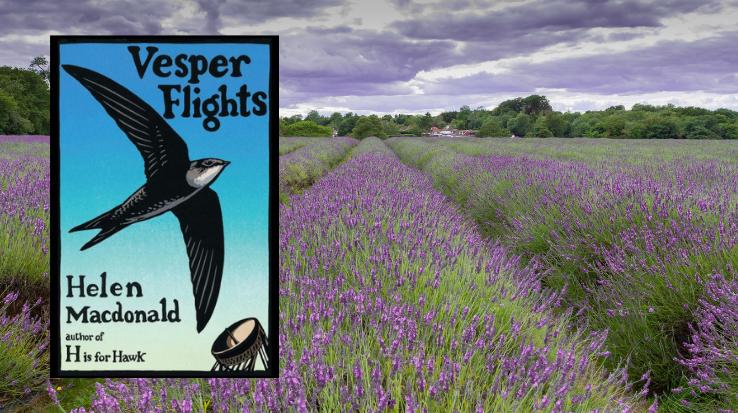
Helen MacDonald's Vesper Flights, released in 2020, is a collection of previously published and new essays near the circuitous relationship between humans and the natural world. Covering topics like mushroom foraging, the 2014 solar eclipse and watching songbird migrations from the peak of the Empire State Building, MacDonald's essays serve as reminders of the pricelessness of the establish and fauna life surrounding us.
Vesper Flights is MacDonald'due south followup to H Is for Militarist, her critically acclaimed memoir about grief, the sudden expiry of her father and her experiences training Northern Goshawks. H Is for Hawk is the recipient of the Samuel Johnson Prize and the 2014 Costa Book of the Year award.
Helen MacDonald, who grew up in Surrey, England, is a naturalist, lecturer and faculty member at the University of Cambridge Section of History and Philosophy of Scientific discipline.
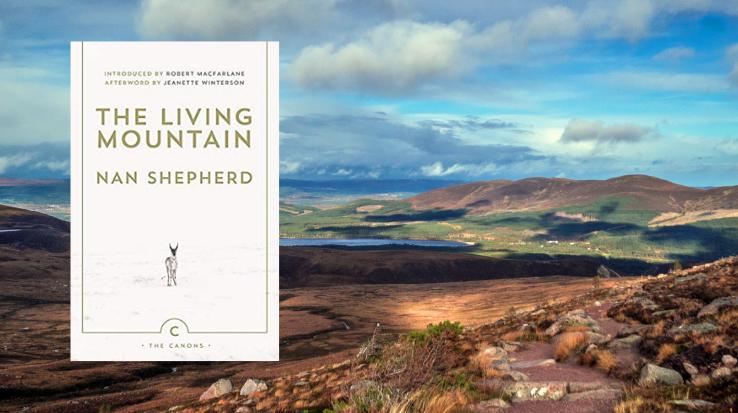
The Cairngorm Mountains of northeast Scotland provide the setting for poet and mountaineer Nan Shepherd's meditative, lyrical volume about the intersection between mountains and the man imagination. Hailed by The Guardian as "the best book ever written on nature and landscape in Britain" and described by author Jeanette Winterson as "a kind of geo-poetic exploration of the Cairngorms," The Living Mountain vividly depicts the varied and diverse landscape of the Cairngorms in all seasons and atmospheric condition.
Written during the afterwards years of World War II but non published until 1977, most the finish of Shepherd's life, The Living Mountain is the effect of Shepherd's lifelong obsession with the mountain range and her conviction that "Identify and a mind may interpenetrate till the nature of both is contradistinct."
Shepherd, built-in in 1893, lived in her hometown of Aberdeen, Scotland, for most of her adult life. She worked every bit a lecturer in English at the Aberdeen College of Education and published several novels set in Northern Scotland.
"Braiding Sweetgrass" by Robin Wall Kimmerer
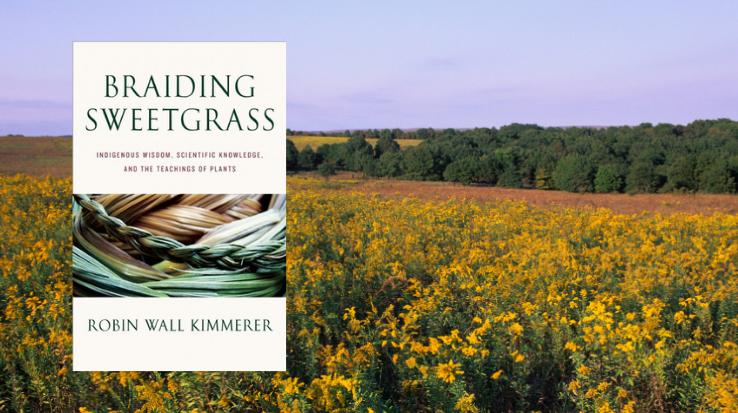
In this ode to everything the establish world has to teach humankind, Robin Wall Kimmerer draws on her feel as an Indigenous scientist and botanist to tell a story most "indigenous means of knowing, scientific noesis, and the story of an Anishinaabekwe scientist trying to bring them together in service to what matters virtually" in Braiding Sweetgrass.
Sweetgrass (scientific name: Hierochloe odorata), a found that's sacred to the Potawatomi people, is central to the volume. "It is chosen wiingaashk – the sweet-smelling pilus of Mother World. Exhale it in and y'all first to remember things you didn't know you'd forgotten," Kimmerer writes in the preface.
Through a serial of interwoven narratives, Kimmerer advocates for a more than reciprocal and interconnected relationship between humans and the natural world. Braiding Sweetgrass is a timely and urgent reminder of the value of Indigenous plant cognition. Simply information technology'south as well an investigation into how this Indigenous knowledge tin work hand in hand with the scientific method to support life on World and ultimately "heal our relationship with the world," equally Kimmerer writes.
Robin Wall Kimmerer is a botanist, a member of the Citizen Potawatomi Nation and an Indigenous scientist. She is the author of Gathering Moss: A Natural and Cultural History of Mosses. Kimmerer is also an American Distinguished Teaching Professor of Environmental and Wood Biology at the Country University of New York Higher of Environmental Science and Forestry.
"The Dwelling house Place: Memoirs of a Colored Man'southward Love Affair with Nature" by J. Drew Lanham
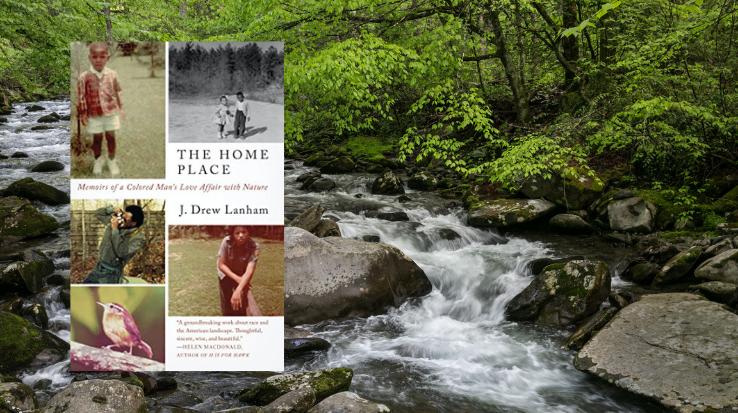
In his 2016 memoir The Domicile Place, author J. Drew Lanham traces his family unit's history back to Edgefield County, South Carolina, where several generations of his ancestors were enslaved prior to the Civil War. Characterizing Edgefield County as somewhere "piece of cake to pass by on the way somewhere else," Lanham interrogates his own complex relationship with the county, and, by extension, how living in Edgefield County shaped his identity as a Black man living in the rural S in the 1970s.
The Habitation Place was listed equally a "Best Book of 2016" by Frontwards Reviews and was a Nautilus Silver Award Winner. William Souder, author of Under a Wild Heaven, described the memoir as "a wise and deeply felt memoir of a black naturalist'south improbable journey." Helen MacDonald, author of Vesper Flights, characterized The Home Place equally "a groundbreaking work nigh race and the American landscape, and a deep meditation on nature, selfhood, and the nature of domicile."
Lanham is a birder, naturalist and hunter-conservationist, besides equally the Alumni Distinguished Professor of Wildlife Ecology and Principal Teacher at Clemson Academy. His essays nearly the natural earth can be found in Orion, Flycatcher and Wilderness.
"Honouring High Places: The Mount Life of Junko Tabei" by Junko Tabei

For readers who are looking for a high-stakes hazard narrative, Honouring High Places: The Mountain Life of Junko Tabei fits the bill. Legendary Japanese mountaineer Junko Tabei was the first woman to summit Chomolungma (Everest) and climb the Seven Summits. Her memoir, released for the kickoff time in English language in 2017 (previously only available in Japanese), provides a fascinating glimpse into Japanese mountaineering civilization and Tabei's groundbreaking life.
Honouring Loftier Places opens with Tabei's recollections from leading the first all-women team to elevation Chomolungma, including a harrowing see with several avalanches on the mountain'due south slopes. In the memoir's diaristic format, Tabei besides writes virtually the gender norms that shaped her childhood, her quest to climb Mount Tabor, her cancer diagnosis later in life, and the aftermath of the 2011 Fukushima earthquake and tsunami.
"2 Trees Make a Wood" by Jessica J. Lee
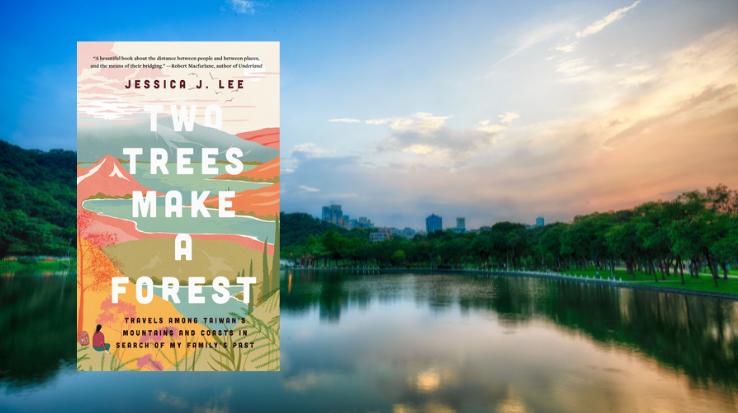
Jessica J. Lee's 2020 book, Two Trees Brand a Wood: In Search of My Family'southward By Amongst Taiwan'southward Mountains and Coasts, is delightfully difficult to categorize. Part historical narrative, part travelogue and part memoir, Two Copse Brand a Woods starts with Lee'due south discovery of letters written past her grandfather, an immigrant from Taiwan. This leads Lee to travel to Taiwan, her family unit'due south ancestral home, where she discovers a new way to think about the links between her family lineage and the place where her ancestors lived.
Lee traces the history of Taiwan from the Qing era upwards to present solar day and writes eloquently nearly Taiwan's natural landscapes, in what Electrical Literature calls "a poetic tour and anti-colonial reclamation of the island through her descriptions of its flora, fauna, natural disasters, and political history."
Jessica J. Lee is a British-Canadian-Taiwanese author, historian, environmentalist and the founding editor of The Willowherb Review. Lee is the winner of the 2019 RBC Taylor Prize Emerging Author Laurels and holds a doctorate in environmental history.
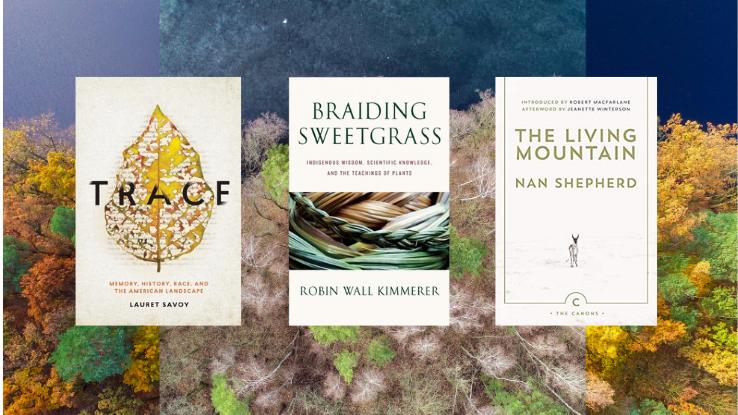
"Trace: Retention, History, Race, and the American Mural" by Lauret Savoy
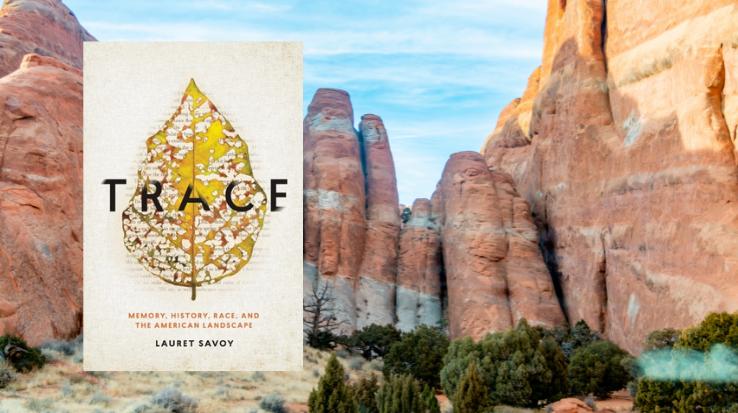
Over the course of eight essays, Lauret Savoy investigates how American history and systemic racism accept informed the way we think near place and regionality in Trace: Memory, History, Race, and the American Landscape. Savoy's grooming as a geologist gives her a unique perspective on the intersection of history and place, and the result is a collection that writer and conservationist Terry Tempest Williams has chosen "a crucial book for our fourth dimension, a bound sanity, not a forgiveness, simply a reckoning."
Lauret Savoy is a woman of African American, Euro-American and Native American heritage and is the David B. Truman Professor of Environmental Studies & Geology at Mount Holyoke Higher. Trace was the winner of the American Book Award (from the Before Columbus Foundation) and the ASLE Environmental Creative Writing Award and was a finalist for the PEN American Open Book Honour.
"Horizon" by Barry Lopez

Barry Lopez'due south sweeping, globe-spanning travel memoir couldn't accept come at a better time. Released in January 2020, Horizon provided a much-needed bit of escapism for readers sheltering in place and quarantining due to the COVID-19 pandemic. Lopez'due south memoir is focused on his time spent in six regions — Littoral Oregon, the Loftier Arctic, the Galápagos Islands, the Kenyan desert, Australia'due south Botany Bay and the glaciers of Antarctica.
As Lopez unravels the histories of these places, he as well looks inward, reminding the reader that "to ask into the intricacies of a afar landscape, and so, is to provoke thoughts about one'southward ain interior landscape, and the familiar landscapes of retention." Horizon as well interrogates our Earth's future, asking what should be washed to tiresome global warming and providing readers with existent-world examples of the dissentious impacts of climate change.
Barry Lopez is the writer of Chill Dreams (winner of the National Book Honour), Of Wolves and Men, and Crow and Weasel. He received fellowships from the Guggenheim, Lannan and National Scientific discipline foundations. Lopez died in 2020 at the historic period of 75.
fourniermorelesucity78.blogspot.com
Source: https://www.ask.com/culture/nonfiction-nature-reading-list?utm_content=params%3Ao%3D740004%26ad%3DdirN%26qo%3DserpIndex
0 Response to "Theories of Human Nature: Classical and Contemporary Readings"
Post a Comment